Disclaimer:
The information on this website is for general guidance only and does not constitute financial or investment advice. Always do your own research and seek personalised advice from a qualified financial adviser or mortgage adviser before making financial decisions. All investments carry risk and past performance is not indicative of future results.
Key Takeaways
- Encroachments can create defective titles and legal disputes.
- Verify boundary pegs and review the deposited plan early.
- Address defects before going unconditional to preserve rights.
- Owners are responsible for encroachments, regardless of cause.
- Solutions include negotiation, court orders, or easements.
Every so often, Schnauer & Co will have enquiries from clients about an encroachment that they have become aware of, many years after purchasing their property. For example, you have your land surveyed and find out that your neighbour has built a fence, not on the boundary, but actually on your land. Or there is a structural addition that extends beyond the legal property boundaries.
Usually this is picked up when owners are selling (during the purchaser's due diligence) or if they are considering subdivision/construction of any extensions or additions.
Important Warning:
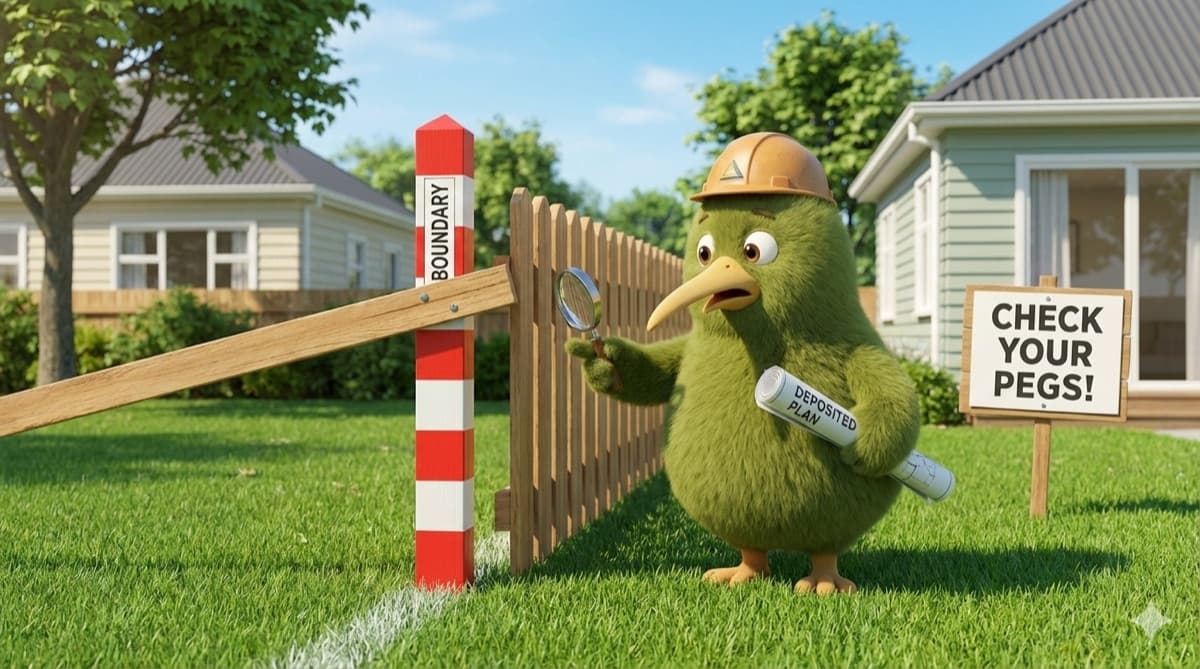
It is not uncommon for purchasers to struggle to locate boundary pegs and to decide not to have the property surveyed. This creates a risk that there could be a boundary encroachment or the land you assume will be yours, isn't. This can also create a defective title and potentially issues with your neighbours and prospective purchasers.
Understanding Your Property Boundaries
When you purchase a property, your legal adviser should provide you with a copy of the title and deposited plan which shows the boundaries. You will be advised to study it and let them know if you have any concerns.
Tip: It is very important to check the physical boundaries and establish where the pegs are. There are various free mapping software products available online (if possible, consider this before signing an agreement to purchase the property).
What to Do If You Discover an Encroachment
If you become aware of a defect in the title such as an encroachment, then you must immediately notify your legal advisor. Purchasers have some protection in the event of any material defects with the title when it comes to the requisition term (specific time-frames apply, assuming the provision in the agreement for sale and purchase is not deleted).
It is best to deal with any defects or any notices regarding issues prior to declaring your agreement unconditional. This is because it could be argued that you accepted those issues, and it could affect your ability to pursue the vendor for costs after settlement.
"Limited as to Parcels" Titles
Some older titles have a notation "limited as to parcels" which means that the legal boundaries are uncertain. There is a greater risk with this type of title of a boundary encroachment especially if any extensions on the property are located close to where the boundary is estimated.
Who is Responsible?
Responsibility for encroachments, regardless of origination, rests with the current landowner. The Court has certain powers to help in the case of encroachments.
Boundaries were set out by the surveyor when the land was first subdivided (e.g. when new title to the properties issued) and these cannot be altered without your consent and the consent of the adjoining lot owner. If there is a dispute which can't be resolved between the parties, a surveyor can establish where the boundaries are, and they can replace survey pegs which have been lost or removed.
Options for Resolving Encroachments
Negotiation Option:
You may be able to negotiate with your neighbour to purchase or sell the area of land on which the encroachment is located. This would require a subdivision consent for the boundary adjustment.
Court Application
Alternatively, you could make an application to the Court. Under the Property Law Act 2007, the Court can make orders which it thinks are just and fair in the circumstances. This may include:
- Reasonable compensation to be paid
- Making an Order to remove the structure
- Giving the owner of the affected land the right to possession of the structure on their land
- Making an Order for the affected land to be vested in the owner of the wrongly placed structure
- Granting an easement
Fence Encroachments
If there is a fence which is not located on the boundary line, then the Fencing Act 1978 applies. The Act requires that any fence is built as close as possible to the boundary line. If it is found that a fence has been erected on the boundary line without the consent of the owner of the land, an application can be made to the Court for an Order that the fence be removed.
The Court Can Order Fence Removal Unless:
- The degree of encroachment is minimal; and
- The encroachment in no way adversely affects the use and enjoyment of the land by the applicant.
Learn More: Neighbourly Tensions: Battling it out Over the Fence!
Frequently Asked Questions
Need personalised guidance?
Chat with a First Home Buyers Club affiliated mortgage adviser - no obligation!
Related Articles

A First Home Buyer's Guide to Real Estate Terms and Sale Methods in New Zealand
Essential guide to understanding real estate terms, sale methods, and property jargon for first-home buyers in New Zealand. Learn about auctions, deadline sales, and more.

Buying a Monolithic or Plaster Home in New Zealand: What First Home Buyers Should Know
Essential guide for first-home buyers considering monolithic or plaster homes in New Zealand. Learn about weathertightness, inspections, insurance, and legal protections.

How to Secure a New Build with a 5% Deposit
Learn how first-home buyers can secure a new build in Auckland with just 5% deposit using the First Home Loan scheme and KiwiSaver.

How to Supercharge Your First Home Deposit in New Zealand
Learn proven strategies to accelerate your savings and reach your deposit goal faster with KiwiSaver and smart saving techniques.