Disclaimer:
The information on this website is for general guidance only and does not constitute financial or investment advice. Always do your own research and seek personalised advice from a qualified financial adviser or mortgage adviser before making financial decisions. All investments carry risk and past performance is not indicative of future results.
Key Takeaways
- Construction loans release funds in stages with more admin.
- Turnkey contracts usually require one final drawdown.
- Construction builds can face cost overruns and delays.
- Turnkey pricing is often fixed but exclusions still matter.
- Seek legal review before committing to either option.
Buying your first home is a major milestone, and for many Kiwis, the idea of a brand-new house is incredibly appealing. Whether it's a fresh build with no previous owners, a well-designed townhouse, or a home built off the plans in a new subdivision, new builds offer modern living and lower maintenance. But when it comes to financing that new build, first home buyers often face a critical decision: construction loan or turnkey?
At first glance, both options result in the same outcome - a new home. But the way you pay for them, the risks involved, and the level of involvement required throughout the process differ significantly. If you're unsure which option is right for you, this guide is here to help.
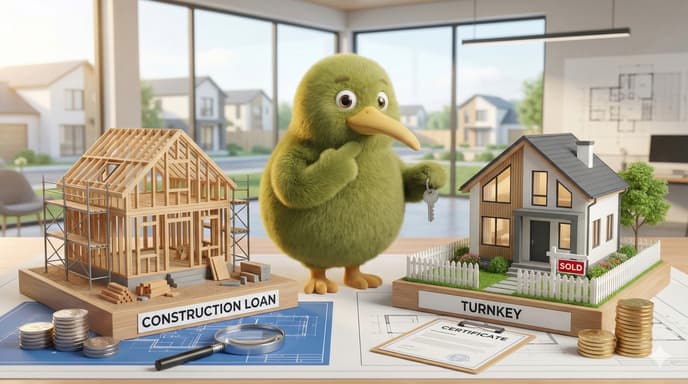
What Is a Construction Loan?
A construction loan is a type of home loan specifically structured to fund the building of a property in stages. This means you don't receive the full loan upfront. Instead, the bank releases money in "drawdowns" at key points of the build - typically upon completion of the foundation, framing, roof, and final handover.
Because of this staged process, construction loans are more hands-on for both the buyer and the lender. The bank will usually require regular updates, council consents, and proof of progress through invoices and potentially valuations before releasing each portion of the loan.
For more detail on how staged payments work, check out our New Build Buying Checklist in the Members Area.
What Is a Turnkey Package?
A turnkey package is where you agree to buy a completed home for a fixed price, and the builder handles the entire construction process. You typically pay a small deposit upfront (often 5–10%), and the remaining balance is paid upon completion - when the keys are handed over to you.
With a turnkey, you don't make payments during the build. Instead, your home loan is only drawn down once the property is complete and ready to move into. This makes it far simpler for first home buyers, especially those who are renting while waiting for their new home to be finished.
Turnkey builds are increasingly common in new housing developments and are often marketed as "first home friendly" options because of the lower upfront costs and reduced stress.
Key Differences Between Construction Loans and Turnkey Contracts
Payment Timing and Structure
With a construction loan, your loan is drawn down in stages. That means you'll be paying interest on the amount that has been used - not the total loan - while the build progresses. However, this can become a burden if you're also paying rent at the same time.
In contrast, a turnkey contract usually involves a single loan drawdown at the end, fixed upfront pricing, and minimal payments during the build (just a deposit). This makes turnkey options ideal for buyers who need to manage their budget carefully while continuing to rent or save.
Risk Management and Cost Overruns
One of the biggest risks with a construction loan is that unforeseen issues - weather delays, material shortages, or council sign-off delays - can cause the budget to blow out. Even with a fixed-price building contract, you may be liable for cost increases if the scope of the build changes.
Turnkey contracts, however, are usually fixed price, which protects you from those cost overruns. The builder carries most of the risk in a turnkey agreement, which is why many lenders see them as lower risk for first home buyers.
Still, it's critical to have a solicitor review the contract carefully to ensure you understand what is and isn't included. Sometimes landscaping, fencing, or driveways are excluded from "turnkey" deals - and that can be a surprise.
Loan Approval Process
Banks typically require more documentation for construction loans. You'll need detailed building contracts, a copy of the building plans, council consent, regular valuation reports during construction, and confirmation of Contracts Works Insurance. This process can be lengthy and complicated, and not all banks offer construction loans to every applicant. In contrast, turnkey packages are simpler for banks to approve because they are treated similarly to existing homes. You don't need to manage stage payments or provide as many documents upfront.
KiwiSaver and First Home Loans
For both construction and turnkey builds, you may be eligible to withdraw your KiwiSaver funds to help with the deposit. However, when it comes to the First Home Loan (offered by Kainga Ora-approved lenders), the bank may assess the application differently depending on the build type.
With a construction loan, you must meet stricter criteria and have a higher deposit buffer because of the perceived risk.
With a turnkey, the simpler structure makes it easier to meet First Home Loan requirements, especially if you're putting down just 5% upfront.
For more information, read our guide on deposit options for first home buyers.
Need personalised guidance?
Chat with a First Home Buyers Club affiliated mortgage adviser - no obligation!
Pros and Cons: Which Option Is Better for First Home Buyers?
There's no one-size-fits-all answer. The right choice depends on your financial situation, your risk tolerance, and how involved you want to be during the build.
Construction Loans Might Suit Buyers Who:
- Want a custom-designed home
- Are comfortable with managing stages and paperwork
- Have additional funds available to cover interest and rent during the build
Turnkey Homes Are Ideal If You:
- Are working with a tight budget
- Need certainty over pricing
- Want a low-stress, hands-off build process
Talk to a mortgage adviser to see how your situation aligns with either option.
Common Pitfalls to Avoid
Whether you're choosing a construction loan or a turnkey package, here are a few legal and financial pitfalls to watch out for:
- Hidden costs: Make sure your contract is clear about what's included - driveways, fencing, window coverings, etc.
- Sunset clauses: These allow the developer to cancel the contract if the build isn't completed by a certain date - something to be cautious of in a hot market.
- Delays: Always budget for potential delays - especially in construction loans where delays can mean more rent or interest costs.
- Developer reputation: Choose a reputable builder or developer with a proven track record and strong reviews.
For more on this topic, you might also be interested in our article: How to Secure a New Build with a 5% Deposit.
Making a Confident and Informed Choice
Buying a new build is one of the most exciting paths into homeownership - but it pays to understand how different funding options can affect your budget, stress levels, and settlement timeline. A construction loan gives you more customisation, but requires more involvement, flexibility, and financial buffer. A turnkey package, while more straightforward, may limit your design choices but offers stability, simplicity, and peace of mind.
No matter which option you're leaning towards, speaking with a mortgage adviser early on can help you understand your borrowing power, manage risk, and avoid costly mistakes. At The First Home Buyers Club, we're here to guide you every step of the way - from KiwiSaver reviews and deposit planning, through to choosing the right home loan structure for your new build.
Frequently Asked Questions
Unlock the Mortgage Calculator
Join free to access all our first home buyer tools and calculators.
Create Free AccountAlready have an account? Sign in
Related Articles

A First Home Buyer's Guide to Real Estate Terms and Sale Methods in New Zealand
Essential guide to understanding real estate terms, sale methods, and property jargon for first-home buyers in New Zealand. Learn about auctions, deadline sales, and more.

Buying a Monolithic or Plaster Home in New Zealand: What First Home Buyers Should Know
Essential guide for first-home buyers considering monolithic or plaster homes in New Zealand. Learn about weathertightness, inspections, insurance, and legal protections.
How to Secure a New Build with a 5% Deposit
Learn how first-home buyers can secure a new build in Auckland with just 5% deposit using the First Home Loan scheme and KiwiSaver.

How to Supercharge Your First Home Deposit in New Zealand
Learn proven strategies to accelerate your savings and reach your deposit goal faster with KiwiSaver and smart saving techniques.