Finding the Right Property
Practical tips for finding the right first home in your budget, from searching smart to spotting red flags at open homes.
Key Points for Your Property Search
- Get pre-approved before you start searching so you know your budget
- Separate your must-haves from your nice-to-haves and be realistic
- Attend plenty of open homes to understand what your budget buys in different areas
- Look beyond cosmetic issues and focus on structural soundness and location
- Your first home does not have to be your forever home
- Research the area thoroughly, including commute times, schools, and future development plans
Before You Start Searching
The most common mistake first home buyers make is browsing listings before they know what they can afford. Getting your finances sorted first saves time and heartbreak.
Get Pre-Approved
A mortgage pre-approval tells you exactly how much a bank will lend you. This defines your budget and shows sellers you are a serious buyer.
Learn about pre-approval →Know Your Total Costs
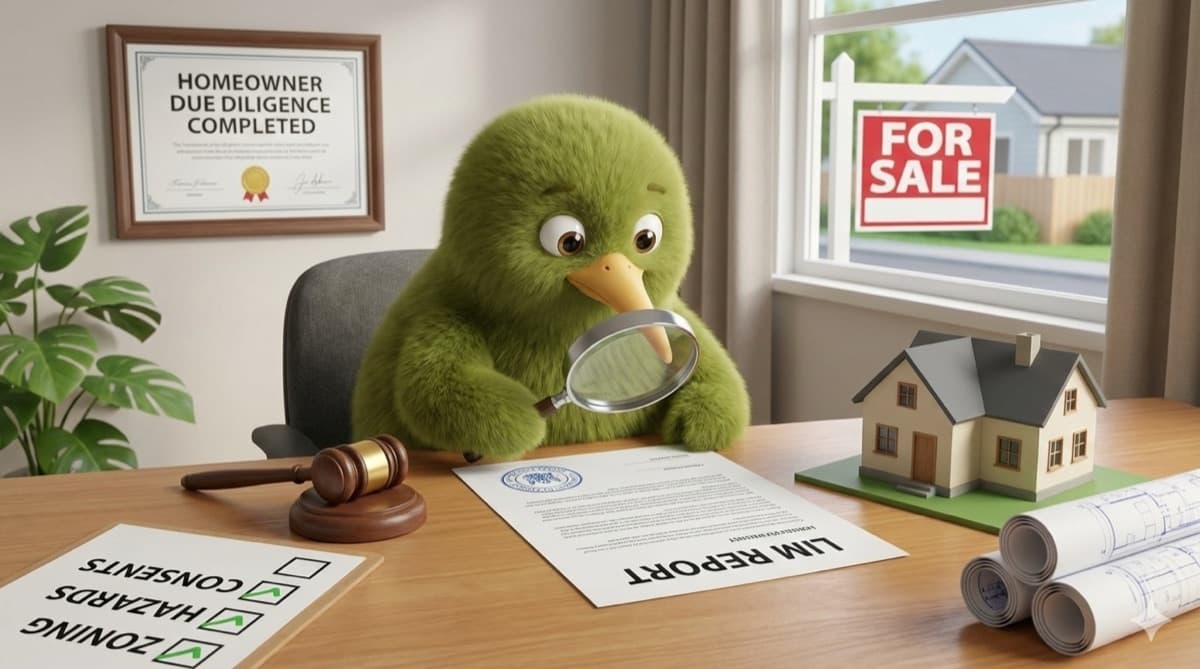
Your budget is not just the purchase price. Factor in legal fees ($1,500 to $3,000), building report ($500 to $800), LIM report ($200 to $400), moving costs, and immediate repairs or furnishing.
Calculate moving costs →Must-Haves vs Nice-to-Haves
Creating two lists helps you stay focused and avoid falling in love with properties that do not suit your needs. Be honest about what you truly need versus what would be a bonus.
Typical Must-Haves
- ✓Minimum number of bedrooms
- ✓Within commuting distance to work
- ✓Structurally sound (no major defects)
- ✓Within your approved budget
- ✓Safe neighbourhood
Typical Nice-to-Haves
- ●Modern kitchen or bathroom
- ●Garage or off-street parking
- ●Large outdoor area or garden
- ●Heat pump or modern insulation
- ●Walk to shops or public transport
Remember: Cosmetic issues like outdated paint, old carpet, or an overgrown garden are cheap to fix. Structural problems, poor location, or a bad floor plan are not. Focus your budget on things you cannot change.
Where to Search for Properties
Cast a wide net initially and then narrow down as you learn what different areas offer for your price range.
Online Listings
Trade Me Property, Realestate.co.nz, and OneRoof are the main platforms. Set up alerts for your criteria so you do not miss new listings.
Real Estate Agents
Register with agents in your target areas. Some properties sell before they are even listed online, and agents can notify you first.
New Builds
New developments often have first home buyer packages with lower deposit requirements and builder warranties.
Word of Mouth
Tell friends, family, and colleagues you are looking. Private sales happen more often than you might think.
Open Home Tips
Attending open homes is one of the best ways to learn what your money buys. Here is how to make the most of each visit.
Before You Go
- • Research the property online first (check the council CV, recent nearby sales)
- • Drive past the property at different times of day to check noise and traffic
- • Bring a checklist, tape measure, and your phone for photos
- • Check for any obvious issues on Google Street View before visiting
During the Visit
- • Check for dampness, especially in corners, under windows, and in wardrobes
- • Look at the ceiling for stains (could indicate roof leaks)
- • Test taps, light switches, and flush toilets if possible
- • Open and close doors and windows to check they work properly
- • Look outside at the roof, guttering, and drainage
- • Note the aspect (which way does the living area face for sun?)
Questions to Ask the Agent
- • Why is the owner selling?
- • How long has it been on the market?
- • Are there any known issues with the property?
- • What is the council valuation (CV)?
- • Has any work been done without consent?
- • What is included in the sale (curtains, light fittings, heat pump)?
Red Flags to Watch For
If you spot any of these issues, proceed with extra caution and always get a professional building inspection before committing.
Musty or Damp Smells
Could indicate moisture problems, mould, or poor ventilation
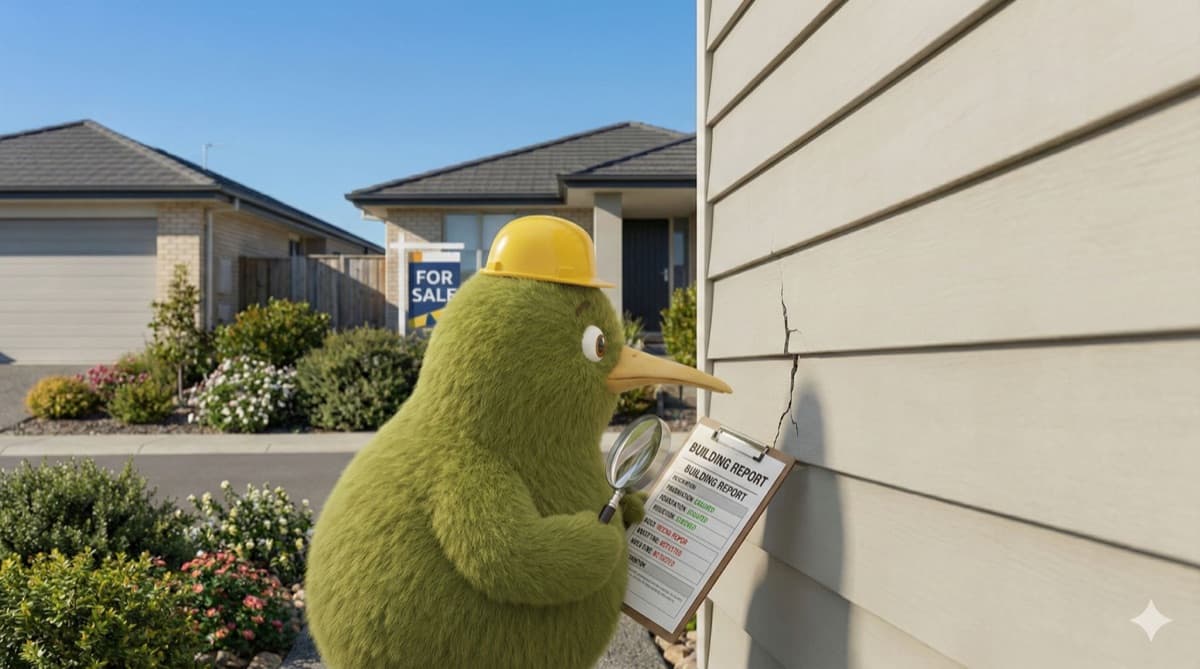
Cracks in Walls or Foundations
May signal structural movement or settling issues
Fresh Paint Over Patches
Could be hiding water damage, cracks, or other defects
Monolithic Cladding (Pre-2005)
Higher risk of weathertightness issues, difficult to insure
Sloping Floors
Foundation issues that can be very expensive to fix
Unconsented Work
Alterations without council approval can cause major headaches
Researching the Area
The property itself is only half the equation. The location and neighbourhood will affect your quality of life every single day.
Commute Times
Drive the route at peak hour to get a realistic picture
Schools
Check school zones even if you do not have children yet
Future Development
Check the council district plan for nearby developments
Flood/Hazard Zones
Check council hazard maps before committing
Amenities
Shops, parks, public transport, medical centres
Price Trends
Has the area been growing in value over time?
Types of Properties to Consider
Each property type has its own advantages and things to be aware of. Understanding the differences helps you search smarter.
Standalone House (Fee Simple)
Full ownership of land and building. Most flexibility but often the most expensive option. You are responsible for all maintenance.
Townhouse or Terrace
Often more affordable than standalone houses. May have body corporate fees. Good stepping-stone into the market. Check the body corporate rules and financial health.
Apartment (Unit Title)
Usually the most affordable entry point. Body corporate fees apply. Check the long-term maintenance fund and any upcoming levies. Banks may have minimum size requirements.
Cross-Lease
Shared ownership of land with exclusive use of your dwelling. Be aware of restrictions on alterations and the need for other owners' consent for changes.
Related Articles


Frequently Asked Questions About Finding a Property
Frequently Asked Questions
Found a Property You Like?
Once you have found a property that ticks your boxes, it is time to make an offer. Learn how to structure your offer, what conditions to include, and how to negotiate.
Learn About Making an Offer →Need Help With Your Property Search?
A mortgage adviser can help you understand exactly what you can afford and where to focus your search.